Paris
In Paris, the Foundation for Literature and Medicine offers two courses. Paris is so rich in medical-literary material that we can not only fill two courses, but also many episodes of this blog. The classification for this is somewhat arbitrary. We will focus on novels, medical and literary figures, and the many old hospitals that still stand in Paris and are still in use. Some of these hospitals are also the setting for novels.
December 6 2025
Paris (1): A clinical lesson by Jean Martin Charcot
Location: Paris V Cité University
Address: Rue des Écoles in the Latin Quarter.
Admission: free
Medical History Museum: 3 euros
How to get there: Metro 4, Saint Michel or Odeon stop, or RER B, Saint Michel stop.
A number of paintings have been made in which a clinical lesson is the subject. A famous example is the painting The Agnew Clinic by Thomas Eakins from 1889.
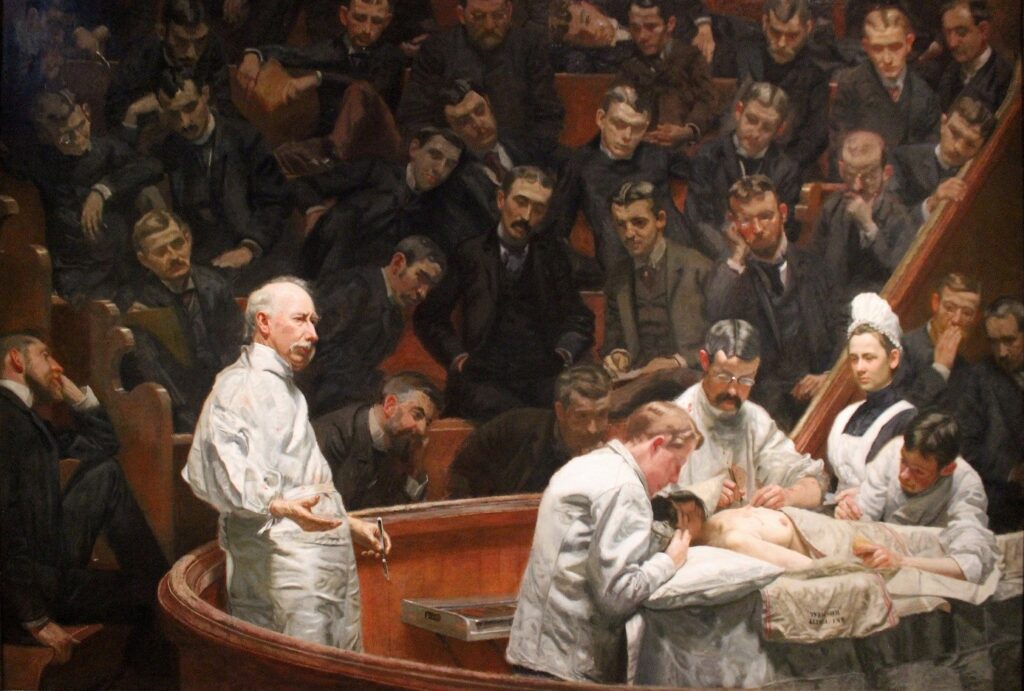
Thomas Eakins, The Agnew Clinic. John Morgan Building, University of Pennsylvania, Philadelphia.
Two years earlier, André Brouillet also painted a clinical lesson.
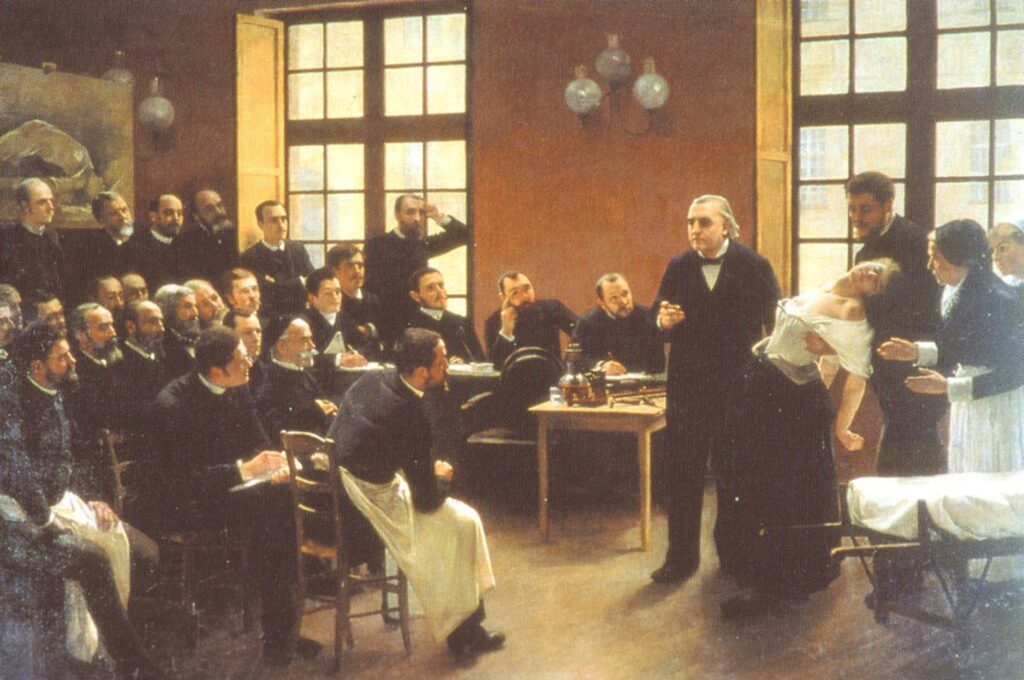
André Brouillet. A clinical lesson at the Salpêtrière, 1887
This painting can be found in the fifth university of Paris: Cité. Founded as Paris IV, Descartes, in 1971 by the division of the University of Paris into 13 universities, and in 2020 merged with two other institutes to form Paris V, Cité.
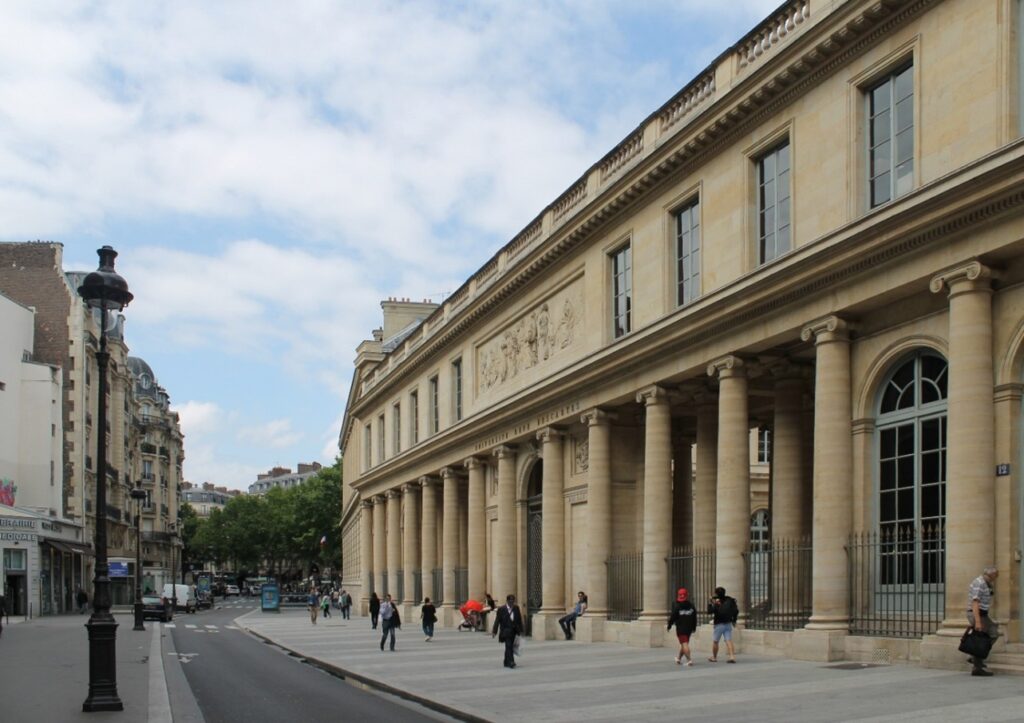
There is security at the entrance, on the right in the picture, but if you say you are coming for the medical history museum, you can walk through after they have taken a quick look in your backpack. You will then enter this hall:
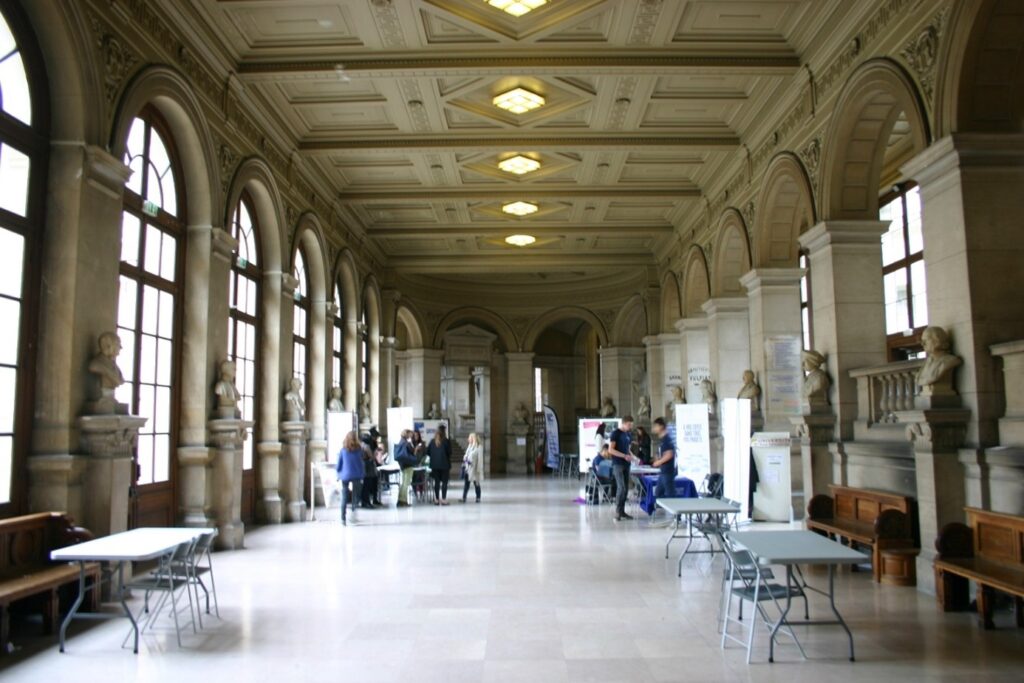
Go up the stairs at the end. Don’t forget to take a look at the large painting, also by André Brouillet, of a hospital ward. It hangs halfway up the stairs.
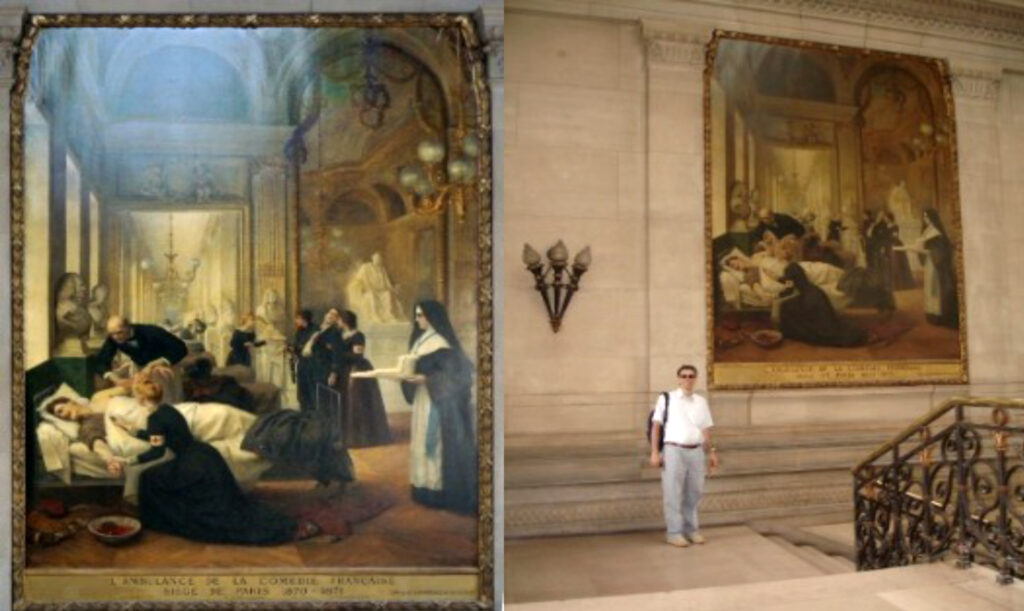
Brouillet was not a painter who specialized in medical scenes. Apart from the two paintings mentioned above, there is only one other known image by him with a medical subject: a test with a vaccine for croup (diphtheria).
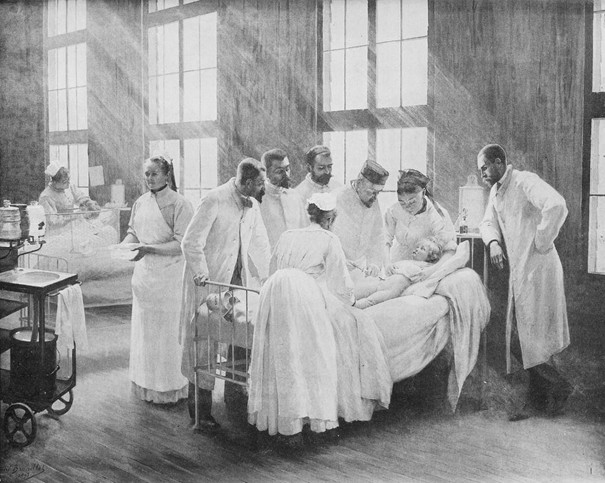
Le vaccin du croup. André Brouillet. Héliogravure, Revue L’Œuvre d’art, May 5, 1895.
Back to Paris Descartes or Cité. At the top of the stairs is the medical library. It’s worth popping in (if you’re allowed, as there are medical students studying there).

Then walk back to the entrance on the first floor. There is also an elevator behind the control desk at the entrance. You have to ask to be allowed to use it. Above that entrance, on the first floor, hangs the (also large) painting by André Brouillet. It hangs in an unflattering location in a small hall, near the restrooms. We see the famous Jean Martin Charcot, a neurologist in the second half of the 19th century.
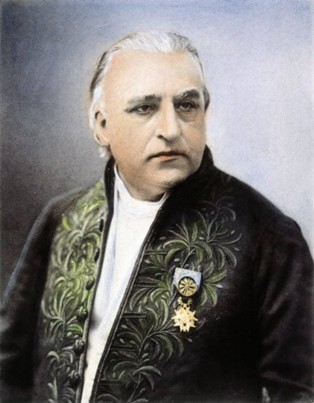
The painting is from 1887. Charcot has many scientific achievements to his name, but he is best known for his research into hysteria. An image of a hysteria demonstration is seen on the painting. The scene of the action: the Salpêtrière hospital (see one of the following episodes). His favorite hysterical patient, Blanche Wittman, is being demonstrated. She has almost fainted, arched backward, as we also see on the left side of the painting, where there is an etching by Paul Richer showing a woman in the characteristic Arc hystérique.
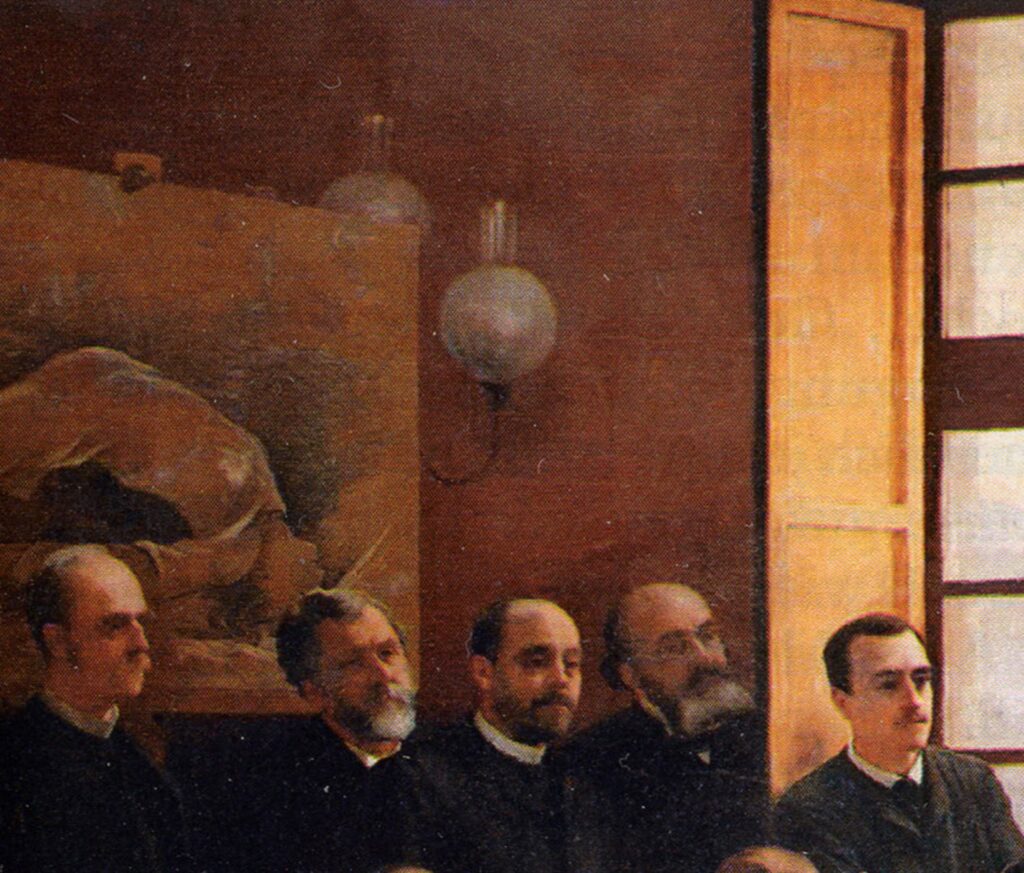
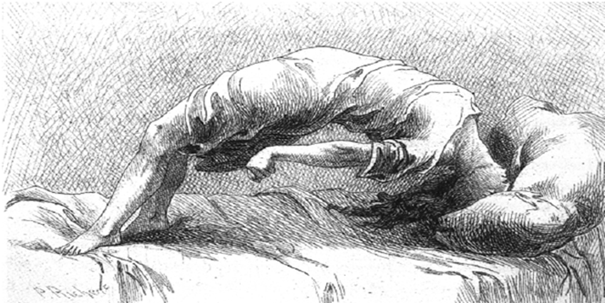
Paul Richer
On the table are a number of instruments, including a device for applying pressure to the ovaries, which was thought to be helpful in the treatment of hysteria.
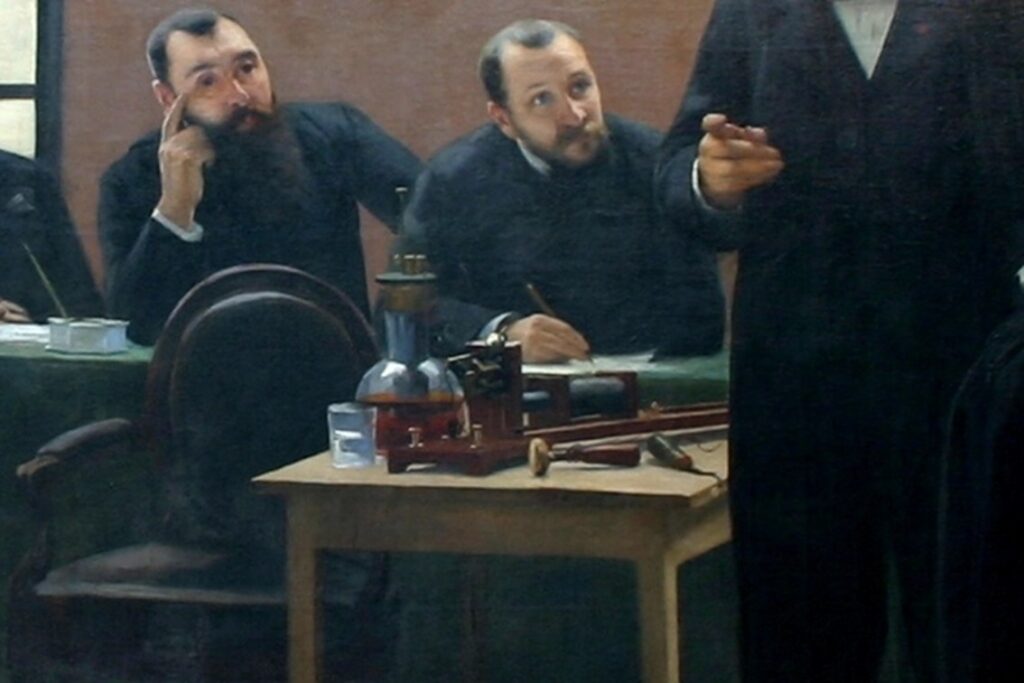
We now know that Blanche was probably not only demonstrated, but also demonstrated herself, and did so very convincingly. These demonstrations were public once a month and very popular with the Parisian public.
Next to the painting in the hallway, there is a sign indicating who is depicted in the painting.
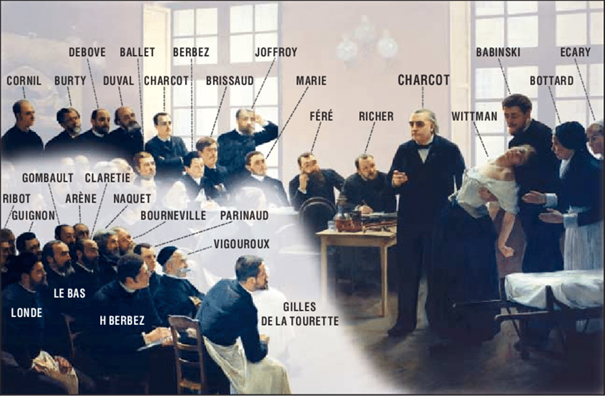
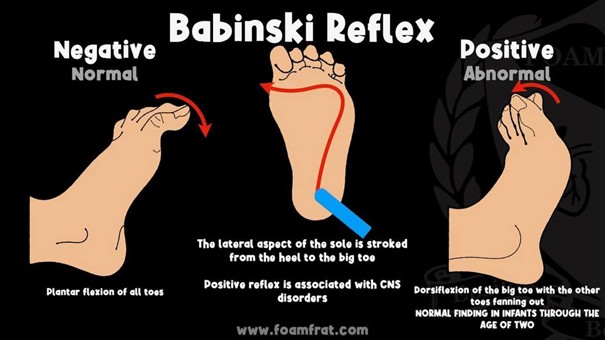
Sigmund Freud is not on it, but he did stay with Charcot for four months, so he must have been there at some point. Freud translated Charcot and, in passing, radically changed Charcot’s views on hysteria. Charcot’s son and Richer (from the etching on the left), also a colleague of Charcot, and two famous students of Charcot are visible: Gilles de la Tourette, from the disease named after him, and Babinski, who is immortalized with the Babinski reflex.
Gilles de la Tourette, as a syndrome, has also found its way into fiction. There is one example in our database: Mr Tourette and I, by Pelle Sandstrak.
I am starting to have problems stepping over thresholds, sitting on chairs, and stepping over important lines. The feeling creeps in and I cannot explain why. If I don’t step over the thresholds in the right way, things can happen, things that will affect my life, my personality, people I am attached to. Parts of the door ritual are remnants from years ago. For example, the number nine. A good number. But if something is good, there is also something bad. Six is a bad number. Explanation: if the nine is a person and you turn that person upside down, the blood flows to the brain, the brain gets too much blood, and you die. A nine turned upside down becomes a six. The number nine is good, six is wrong. So I can’t say or write the number six. But then how do I count to nine? One two three four five six seven eight nine? No. Because then the six is included. The correct answer is: one, two, three, four, five + one, two, three, four = nine. The same result, but you reach the number nine via a detour. The color red has also been around for a long time. Explanation: red = south = heat = causes sweat = causes bacteria = causes disease = causes death = bad color. A red color is a dead color is a bad color. Blue, on the other hand, is a good color: blue = northward = cold = no sweat = no bacteria = no disease = no one dies = good color.
In addition to this book, there is the novel Skull Session by Daniel Hecht and Motherless Brooklyn by Jonathan Lethem, featuring a detective with Tourette’s syndrome in the lead role.
Babinski, on the other hand, has never been fictionalized, as far as I know. He is important enough as a neurologist to warrant a substantial biography. But Charcot has made his way into fiction. In our second Paris course, we discuss Charcot and these novels. In this blog, we will discuss these novels when we discuss the Salpêtrière Hospital.
Once you are standing in front of the painting in Paris Cité, it is worth climbing another flight of stairs to the medical history museum. For a few euros, it is probably the quietest museum in Paris, and you don’t have to book in advance.
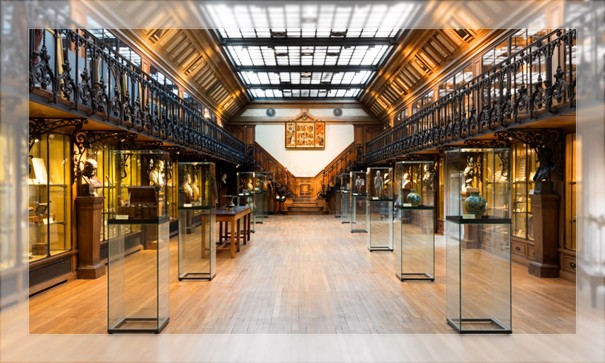
In itself, this is not a spectacular museum. It is fairly conventional and, on a much smaller scale, comparable to the Boerhaave Museum in Leiden in the Netherlands. Of course, here it has a French flavor and features medical luminaries who are sometimes unknown to us. The room, with a raised walkway, resembles the other historical museum in the St. Louis Hospital, which we will also discuss in this blog.
Arko Oderwald