Film
Das Verschwinden des Josef Mengele, now in theaters
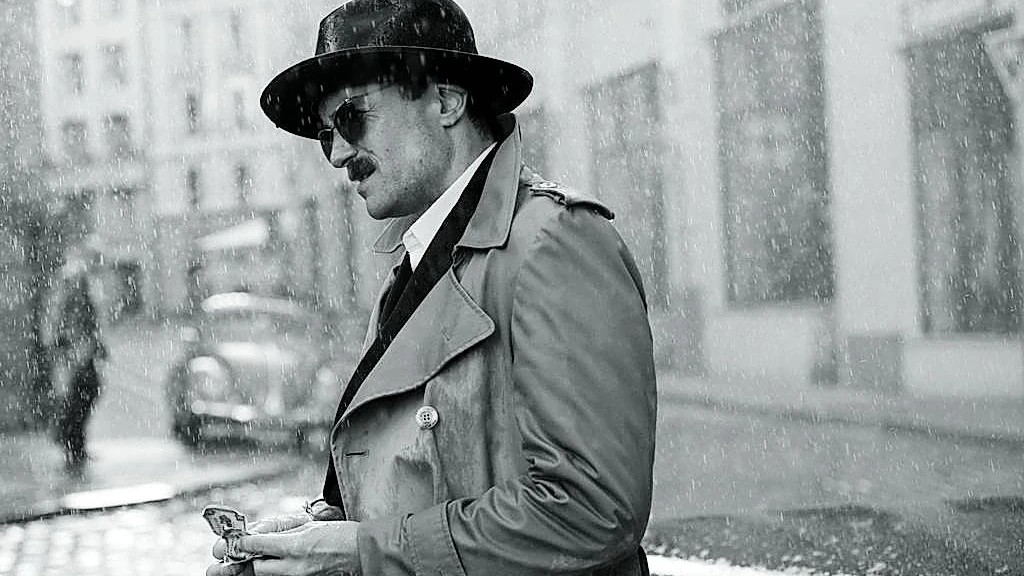
In 2017, the novel Le disparation de Josef Mengele by author Olivier Guez was published (published in Dutch in 2018). A fantastic book about how Josef Mengele, the infamous Auschwitz doctor, managed to evade justice despite constant persecution with the help of aliases, family, and “alte Kameraden” (and a new one).
That book has now been transformed into a film that is as fantastic as it is chilling by Russian director Kirill Serebrennikov, a fierce critic of Putin. Das Verschwinden des Josef Mengele is shot almost entirely in black and white. The word ‘solemn’ always comes to mind, but that would not do the film justice. After all, one of the few times—and by far the longest—that Serebrennikov switches to color is precisely when the film returns to 1943, to Auschwitz. It makes the images, which give the impression of having been shot on location with a handheld camera, even more gruesome than they already are. Serebrennikov thus reverses the visual language of Schindler’s List, in which the only color images are those of hope.
1943 is the furthest date in the past; the film begins in the present, more precisely in 2023. A doctor shows medical students a skeleton – “A real skeleton?” “Yes, this is a real skeleton.” – and tells them that it is the skeleton of Josef Mengele. Because none of the students recognize the name, he explains, and then the film begins, with Serebrennikov constantly jumping back and forth between various periods prior to the moment when Mengele walks into the Atlantic Ocean in 1979, unmistakably suggesting suicide.
The other periods are: the late 1950s, when he marries for the second time, to the sister of his deceased wife, and can still toast the resurrection of the Reich. The early 1960s, when the tide turns with the Eichmann trial. Around 1970, when he is in one of his hideouts and it becomes clear what that means for those – Hungarian, living in South America, fierce anti-Semites – who provide him with shelter in exchange for payment. And, in the mid-1970s—for me, the most important scenes in the film—when he sees his son Rolf again, the child of his first wife, whom he constantly called “weak,” who wants nothing to do with him or his family but is nevertheless bound to him for life by their shared, rare surname.
In all these scenes, we see and hear Mengele justifying his actions, attacking his alleged or real pursuers, denying the Holocaust, praising Nazism and the superior German Aryan people, looking lustfully at twins, and rejecting his helpers. And we see him berating his former medical colleagues. On the one hand, because they do not share his unfortunate fate (for example, because they are happily working at a German university, like his old mentor Otmar von Verschuer) and, on the other hand, because, in the eyes of those terrible long-haired hippies, they have certainly done terrible things, but everyone always talks only about him: Josef Mengele, the Angel of Death. It must be said, he does have a point there. It is because he managed to stay out of the hands of justice that he became the symbol of everything that was wrong with and in the Nazi era.
In other words, we see not only a horrible man, but also a man who suffers from the constant threat of exposure and the resulting isolation. We see a deeply pitiful figure with whom it is impossible to feel sympathy.
Go see for yourself.
Leo van Bergen, medical historian